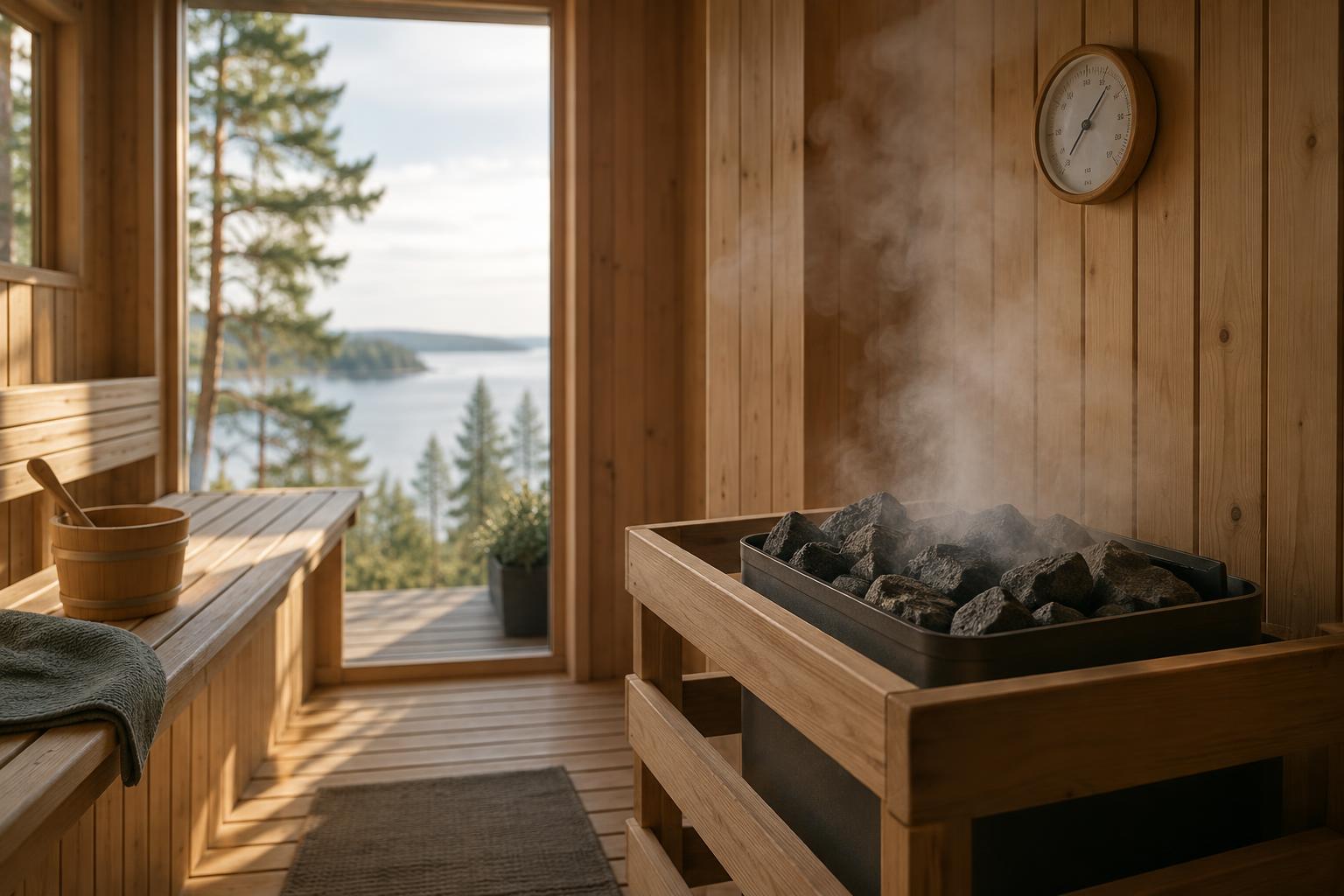
Sauna heat is about more than the number on the wall. Humidity, heater type and thermometer height all affect how you interpret it. Löyly, the burst of steam when water meets hot sauna stones, can make the cabin feel hotter with little change in air temperature. A higher reading does not tell the whole story.
The temperature on the wall
A thermometer measures the air where it sits, not the whole cabin. Humidity and the way the sauna is heated help explain what that reading feels like.
Vidalux describes traditional saunas as commonly reaching 70–90°C, sometimes higher. This is an operating range, not a target you need to reach. In a more personal account, the Hakka Sauna writer describes entering their barrel sauna with the temperature in the 60s Celsius.
Neither account establishes an ideal temperature. A preferred reading in one cabin may feel quite different in another, depending on the heating method and moisture.
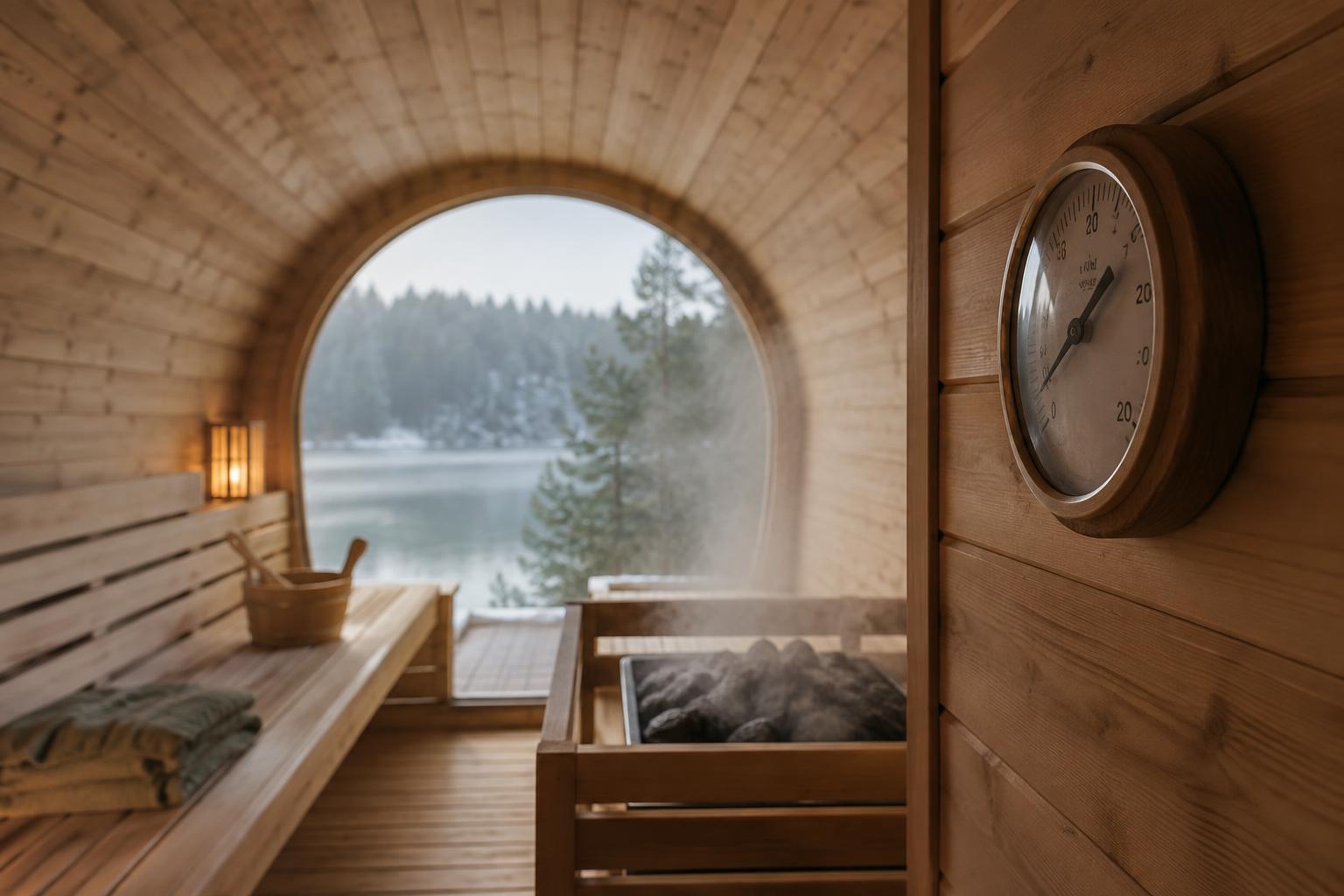
Heat changes with height
Warm air rises, and the gap between floor and ceiling can be considerable. In Hakka Sauna’s barrel-sauna test, the top sensor read 75°C, the bench sensor 53°C and the floor sensor 38°C. The pattern illustrates why thermometer position matters, though those exact differences belong to that cabin and test.
Even instruments beside each other disagreed. A regular thermometer next to the top sensor displayed 85°C, rather than the sensor’s lower reading.
So a measurement near the top of one sauna is not equivalent to a bench-height reading in another. Position matters, but so does the accuracy of the instrument.
Humidity and the burst of löyly
Humidity is moisture in the air. Löyly is the distinct burst of steam produced when you pour water onto hot sauna stones. They are connected, but one describes a condition and the other an event.
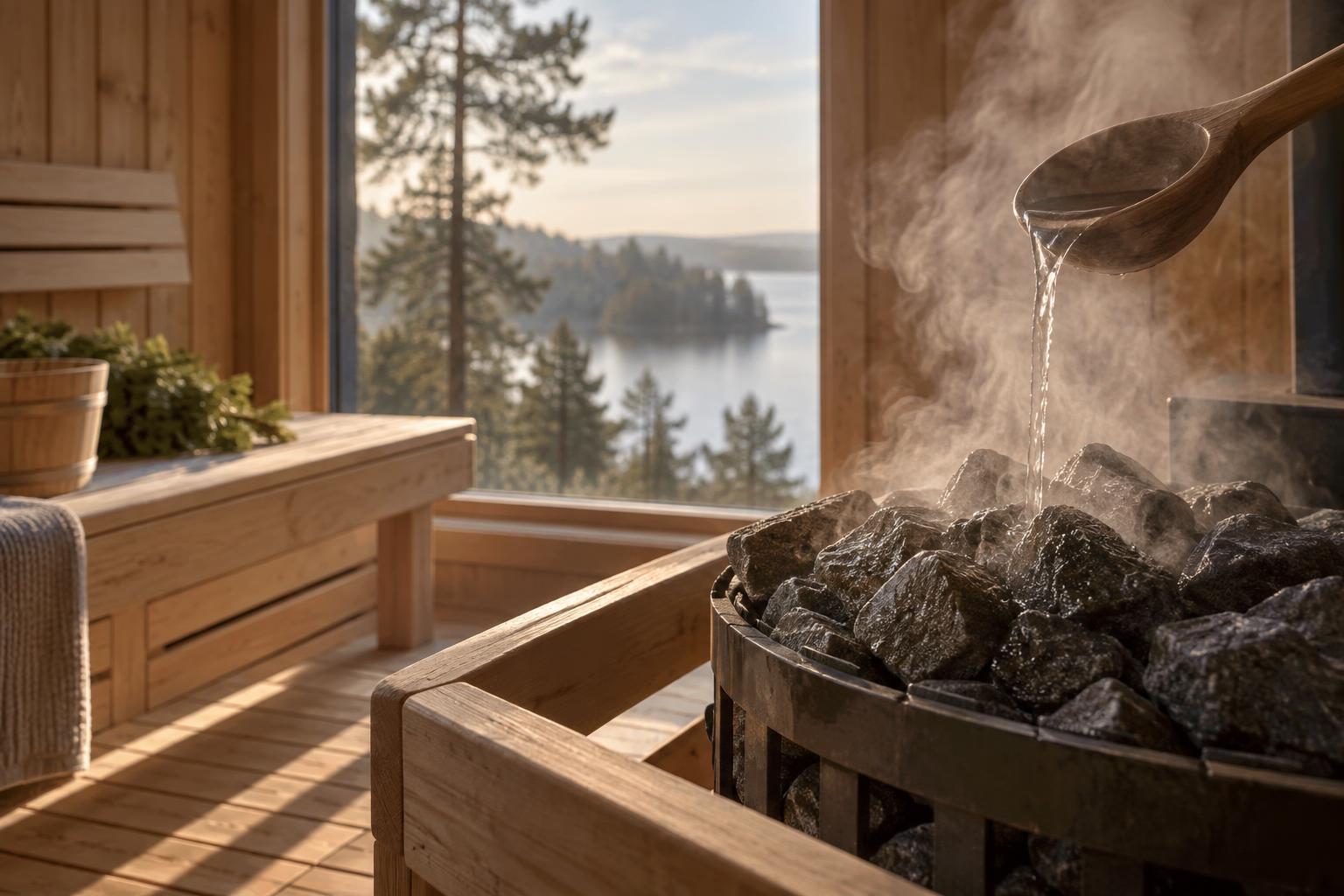
Wild Sauna UK and Vidalux explain that löyly increases perceived heat while changing the air temperature relatively little. The cabin can suddenly feel hotter without a matching jump on the thermometer. Turning up the heater is not the only way to change the experience.
Relative humidity also depends on temperature, as Hakka Sauna notes, and its measurement depends on instrument accuracy. A higher percentage in one cabin does not make it better than a drier sauna elsewhere.
Different heaters, different heat
Traditional and infrared saunas heat differently. Vidalux describes traditional saunas as using a stove and heated stones to warm the surrounding air. Infrared models, according to Wild Sauna UK, use emitters to heat you directly. They lack the stone-stove arrangement needed for water-on-stones löyly.
Steam & Oak says löyly works across electric, wood and gas sauna types, but Wild Sauna UK points out that some electric heaters are not rated for water exposure. The broad heater category cannot tell you whether a particular model accepts water.
In its discussion of flueless gas saunas, Steam & Oak also describes continuing background moisture from combustion, distinct from the brief burst of löyly. That supplier account concerns a particular arrangement, rather than the humidity of gas saunas in general.
Before you add water
The heater must be designed for water on its stones. Wild Sauna UK warns that water on an unsuitable electric heater can cause damage or trigger its safety cut-out. Getting hot is not enough to make a heater suitable for löyly.
For a suitable heater, the guide favours small amounts more often over drenching the stones. A large pour cools them and can produce less steam overall. If you are new to löyly, its advice is to begin without it or try very small pours.
Ask the other people in a shared sauna before adding water. Some prefer a drier session, and everyone in the cabin feels the change.
If you are comparing home saunas, look for a particular heater that supports the experience you want. An electric or wood-fired label alone will not settle that.
Questions people ask
- What is the ideal sauna temperature?
- There is no single ideal temperature established by these sources. Vidalux gives a common operating range for traditional saunas, sometimes exceeded, rather than a target. Humidity, cabin type and thermometer position all affect how you interpret the reading.
- Does löyly raise the air temperature?
- The air temperature changes only slightly, while the burst of steam can make the sauna feel hotter. That change in perceived heat is something the thermometer cannot fully capture.
- Can you pour water onto any electric sauna heater?
- No. Some electric heaters are not rated for water exposure, as Wild Sauna UK notes. Before adding water, check that the particular heater is designed for it on its stones.
- Why is the temperature lower near the floor?
- Warm air rises. Hakka Sauna’s barrel-sauna test found cooler air at floor level than at the bench or top of the cabin, though the exact differences will not apply to every sauna.
- Is higher humidity always better?
- No. Relative humidity depends on temperature, measuring instruments vary in accuracy, and some people prefer drier sessions. A higher percentage alone does not establish a better sauna experience.
Plan your home sauna
Size, heater, wood and budget in one place, then get quotes from vetted UK builders.