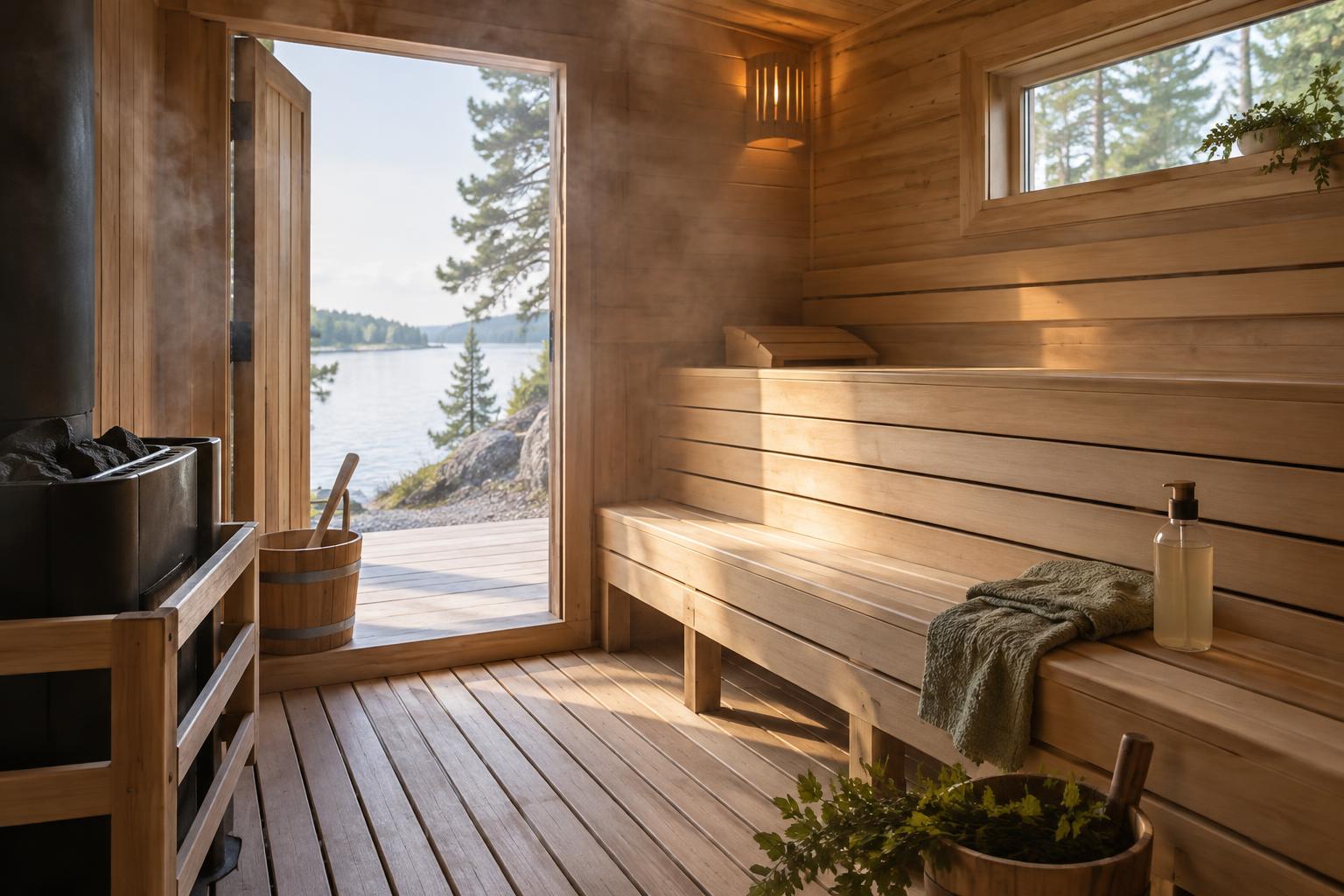
Wipe benches and floors after use, remove loose dirt and use a mild sauna-safe cleaner for deeper cleaning. Leave the door or vents open until the interior is fully dry. Check the timber, heater stones and outdoor surfaces regularly. Interior wood does not always need oiling, so keep cleaning, bench treatment and exterior protection separate.
Wipe down, then let the sauna dry
After each session, wipe benches, backrests and floors with a damp cloth to remove sweat and oils. Warm water is suitable for routine rinsing of benches and floors in Scottish Saunas’ guidance. Save detergent for the deeper clean.
Take your towels and personal items out, then empty and clean any water buckets you used. Sitting on a towel can help reduce bench marks, a simple precaution recommended by Almost Heaven.
Leave the door or vents open so moisture can escape. The important thing is to let the interior dry fully, rather than close it up when a timer runs out. Summerhouse24 gives 30–60 minutes with the door open in its daily checklist, but elsewhere says to wait until the sauna is completely dry. Scottish Saunas also uses full drying, not a fixed time, as the guide.
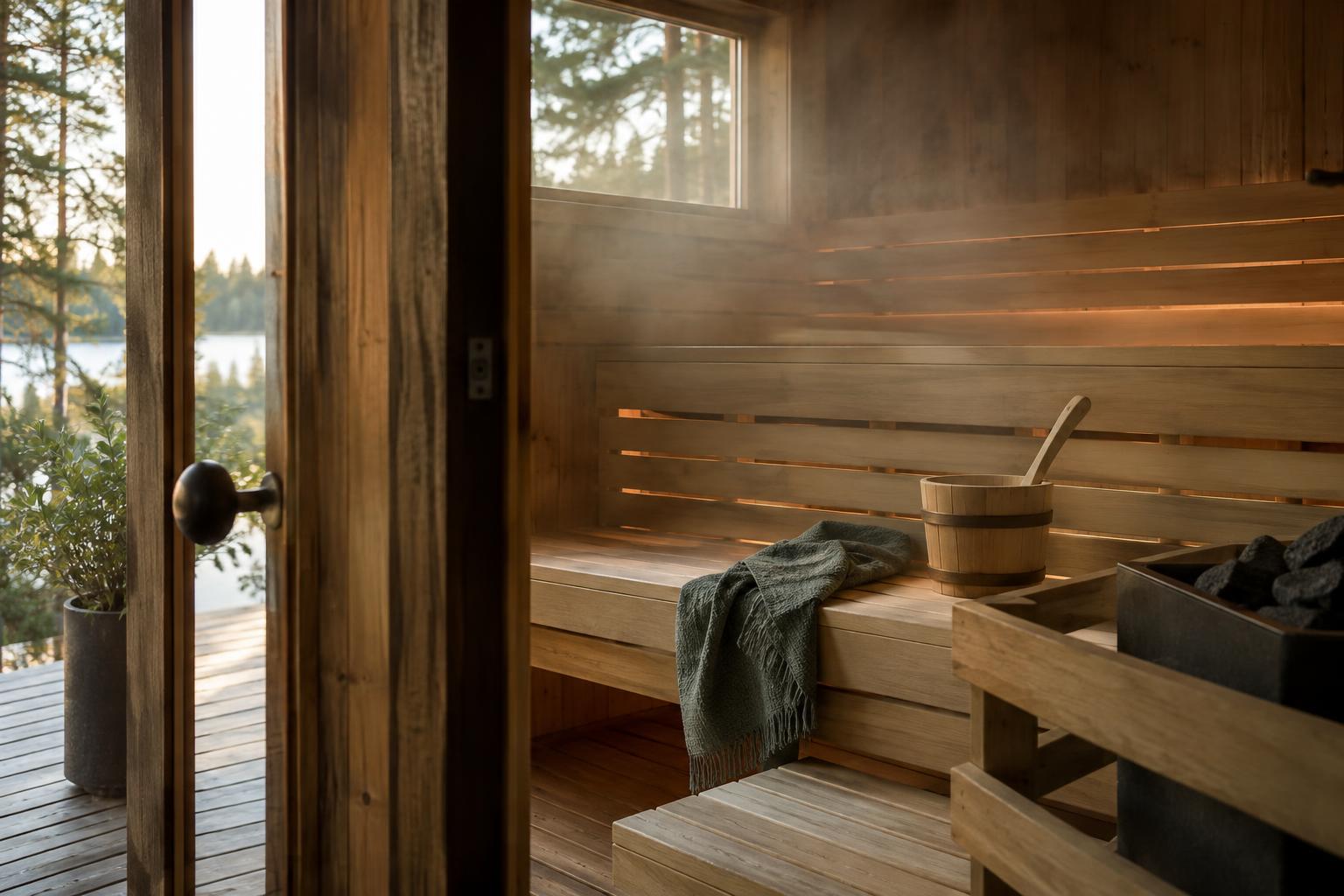
A fuller clean for wood, floors and glass
Sweep or vacuum loose dirt and debris from the floor. Summerhouse24 puts this on a weekly schedule, along with cleaning wooden surfaces and checking ventilation openings for obstructions. The routine from Scottish Saunas is less fixed: a quick clean after use, with mild detergent for deeper cleaning.
Choose a mild cleaner intended for sauna wood. Harsh chemicals can damage the timber, according to Scottish Saunas. For a deeper scrub, Summerhouse24 suggests a soft brush and sauna-specific cleaner. Give the benches and backrests attention too, rather than stopping at the visible floor.
Lift out removable duckboards, wash them and let them dry before returning them. Use a non-abrasive glass cleaner on glass doors or panels. For the interior, Almost Heaven recommends gentle rinsing, not power washing.
Keep ventilation openings clear. Drying matters just as much as cleaning in ongoing sauna care.
Dealing with marks and treating bench wood
Stubborn marks may need sanding, but regularly maintained benches may only need cleaning. That is Woodcare.guide’s approach to preparation: sand when grime has accumulated or the benches have gone a long time without cleaning or treatment.
For marks and sweat stains, Scottish Saunas recommends fine-grit paper. Work gently along the grain, then wipe away the dust with a damp cloth. Woodcare.guide specifies 120-grit paper for bench preparation. Almost Heaven takes a calendar-based approach, suggesting annual sanding of benches or stained areas rather than waiting for visible build-up.
Oiling is a separate decision. Interior wood can remain untreated under Scottish Saunas’ guidance. Woodcare.guide recommends paraffin oil or another sauna treatment oil, applied once a year for occasional use and at least twice a year for weekly or shared use. This is not a universal oiling schedule.
Paraffin oil suits most sauna woods, according to Woodcare.guide, which advises testing it in a hidden area first. Almost Heaven warns against staining or varnishing the interior. Keep bench treatment distinct from the weather protection used outside.
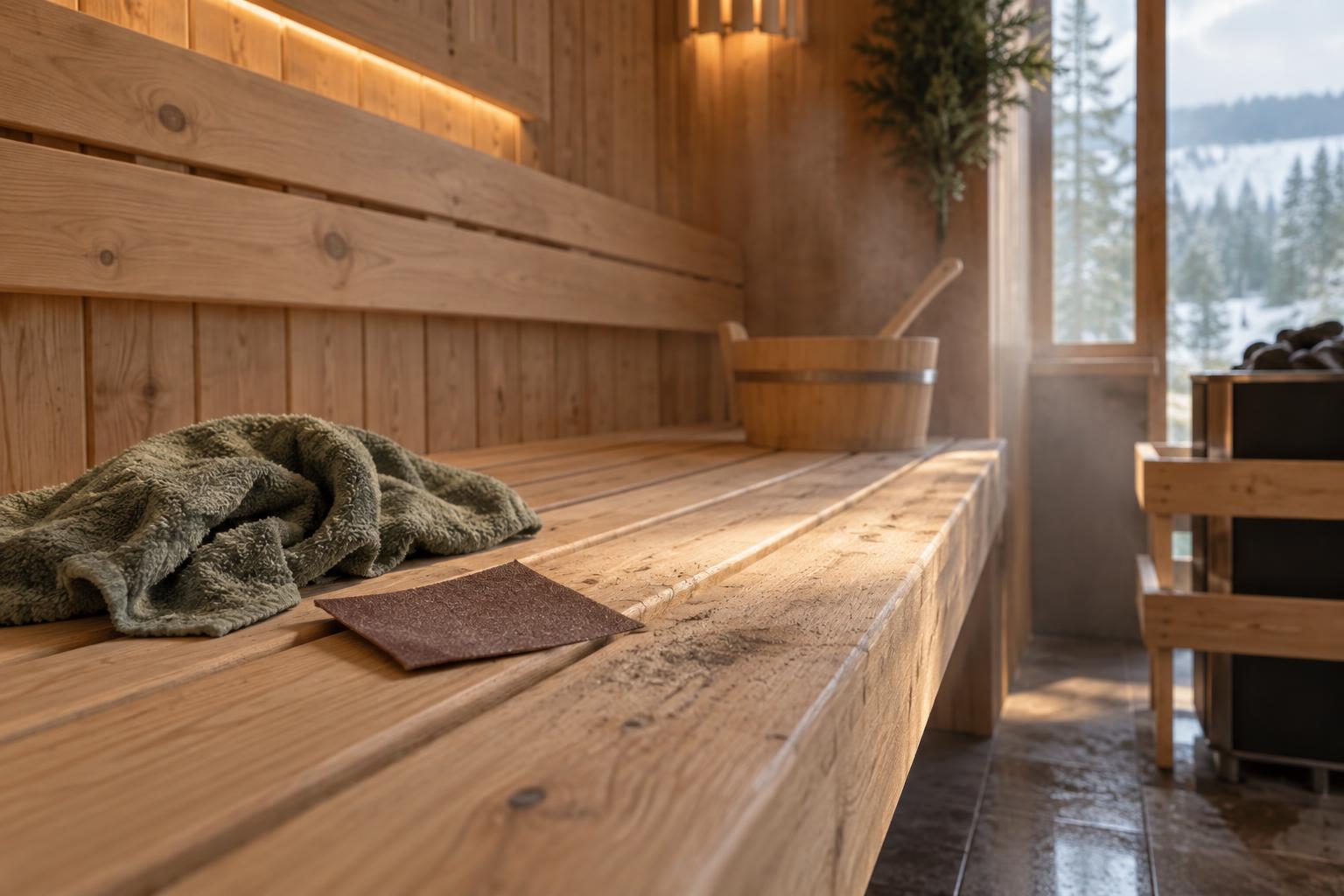
Heater stones and wood-burning upkeep
Check heater stones regularly. In electric heaters, replace any that are cracked or crumbling, as Scottish Saunas recommends. Sound stones help provide even heat and steam when water is poured over them.
Condition is not the only approach in the guidance: Palmako includes rotating or replacing stones in its yearly checklist. That does not mean every set needs annual replacement. There is no replacement interval here that applies to every heater.
For a wood-burning sauna, the maintenance advice from Scottish Saunas includes clearing the ash pan, checking the chimney for blockages and having it swept periodically.
You can ask Scottish Saunas for maintenance advice if you are unsure about heater stones or wood treatment. Use a qualified electrician for electrical work.
Looking after a garden sauna through the seasons
Exterior timber needs care as well as the interior. An annual application of suitable oil or protective finish is recommended by Scottish Saunas, whose summer advice includes washing the exterior and renewing its protective oil. Almost Heaven also suggests periodic low-pressure exterior washing to remove dirt and debris.
Once or twice a year, look for cracks in the wood, roof leaks and signs of pests. Wet weather is a time to check for water seepage. These inspections belong alongside regular cleaning, not in place of it.
In winter, clear snow from barrel and cube sauna roofs so its weight does not accumulate. This is part of Scottish Saunas’ seasonal guidance, along with checking seals and unwanted water collection around large glazed panels. If there is an external water supply, drain it before hard frosts.
Keep wiping and airing the interior after use throughout the year.
Questions people ask
- How often should you clean a home sauna?
- Wipe surfaces and air the sauna after each use. For a fuller routine, Summerhouse24 recommends weekly floor and surface cleaning and a monthly deeper scrub. Scottish Saunas gives a less fixed schedule. How often you use the sauna also affects its cleaning needs.
- Can you pressure wash the inside of a sauna?
- No, Almost Heaven advises against power washing the interior. Use gentle rinsing and a mild cleaning solution instead. Its advice on low-pressure washing is for the exterior.
- Do sauna benches need oiling?
- Not necessarily. Scottish Saunas allows interior wood to remain untreated, while Woodcare.guide recommends paraffin oil or another sauna treatment oil, tested in a hidden spot first. The guidance does not consistently make oiling a requirement for every sauna.
- How do you remove stubborn marks from sauna benches?
- Try light sanding with fine-grit paper, working gently along the grain, then wipe away the dust with a damp cloth. This is Scottish Saunas’ recommendation. Woodcare.guide distinguishes between regularly maintained benches, which may only need cleaning, and accumulated grime that can call for sanding.
- When should you replace sauna stones?
- Cracks or crumbling are the replacement signs given by Scottish Saunas. Palmako instead includes rotation or replacement in its annual checklist. These recommendations do not establish a single replacement interval for every heater.
Plan your home sauna
Size, heater, wood and budget in one place, then get quotes from vetted UK builders.