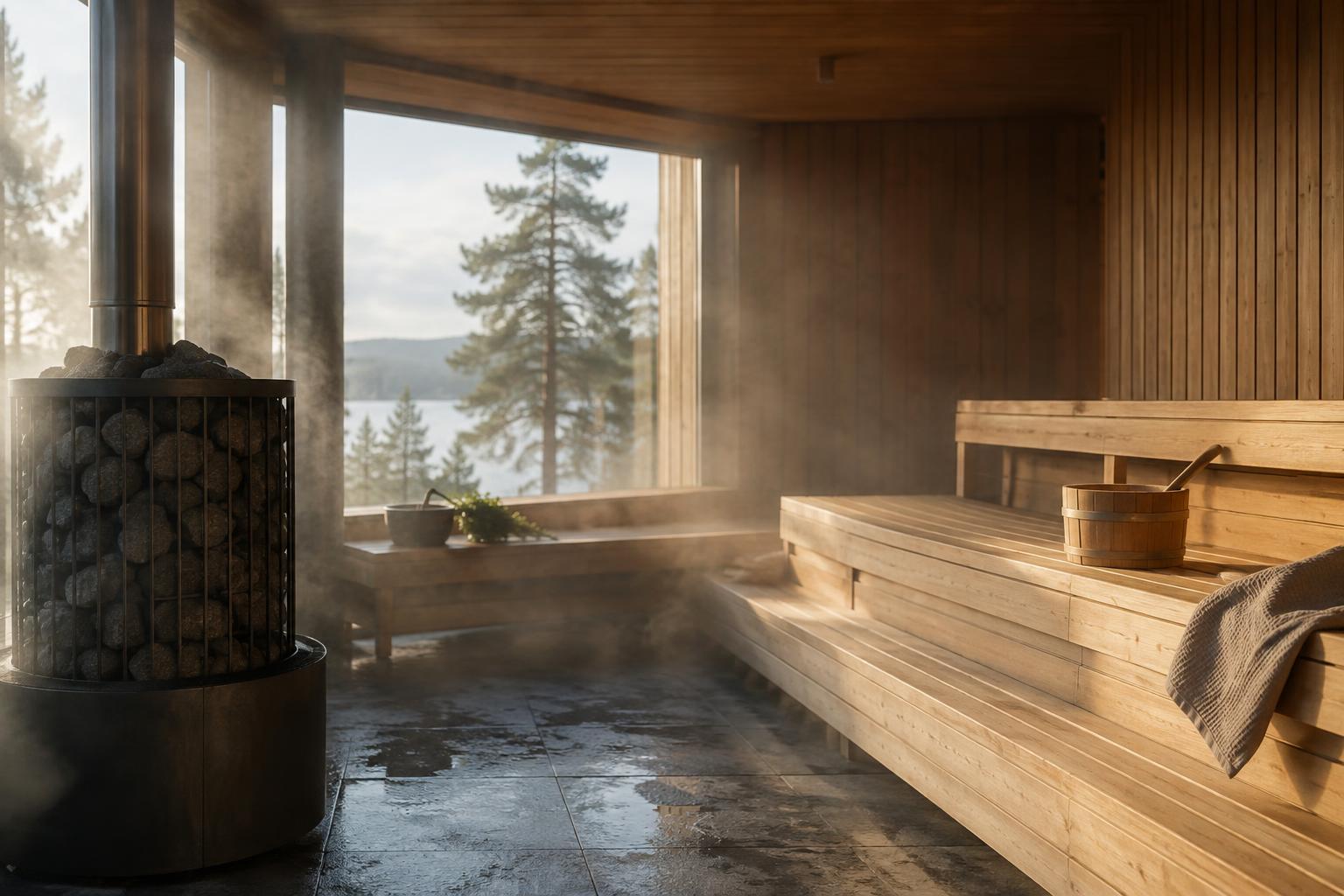
Finnish sauna and Swedish bastu share a heated timber room and a stone-filled heater. Differences lie mainly in how people use them: their preferences for heat, steam and company. Sources often describe Finnish sessions as hotter and more ritual-focused, but they disagree about Swedish humidity. Neither name alone tells you exactly what a session will feel like.
Shared rooms, different traditions
Sauna is closely tied to Finnish everyday life and cultural identity. Finland’s sauna culture joined UNESCO’s Intangible Cultural Heritage list in 2020, recognising a living social tradition, not a particular heater or cabin design.
Bastu is simply the Swedish word for sauna. Aitosauna describes Finnish sauna and Swedish bastu as nearly identical in basic practice: spending time in a heated room and adding water to hot stones to create steam.
Construction overlaps too. Tahoe Sauna Company describes both as wooden rooms with benches and an electric or wood-burning heater holding stones. These national names do not identify entirely separate types of equipment. How a sauna is used, its temperature and its approach to steam make a more useful comparison.
Heat depends on the room and the session
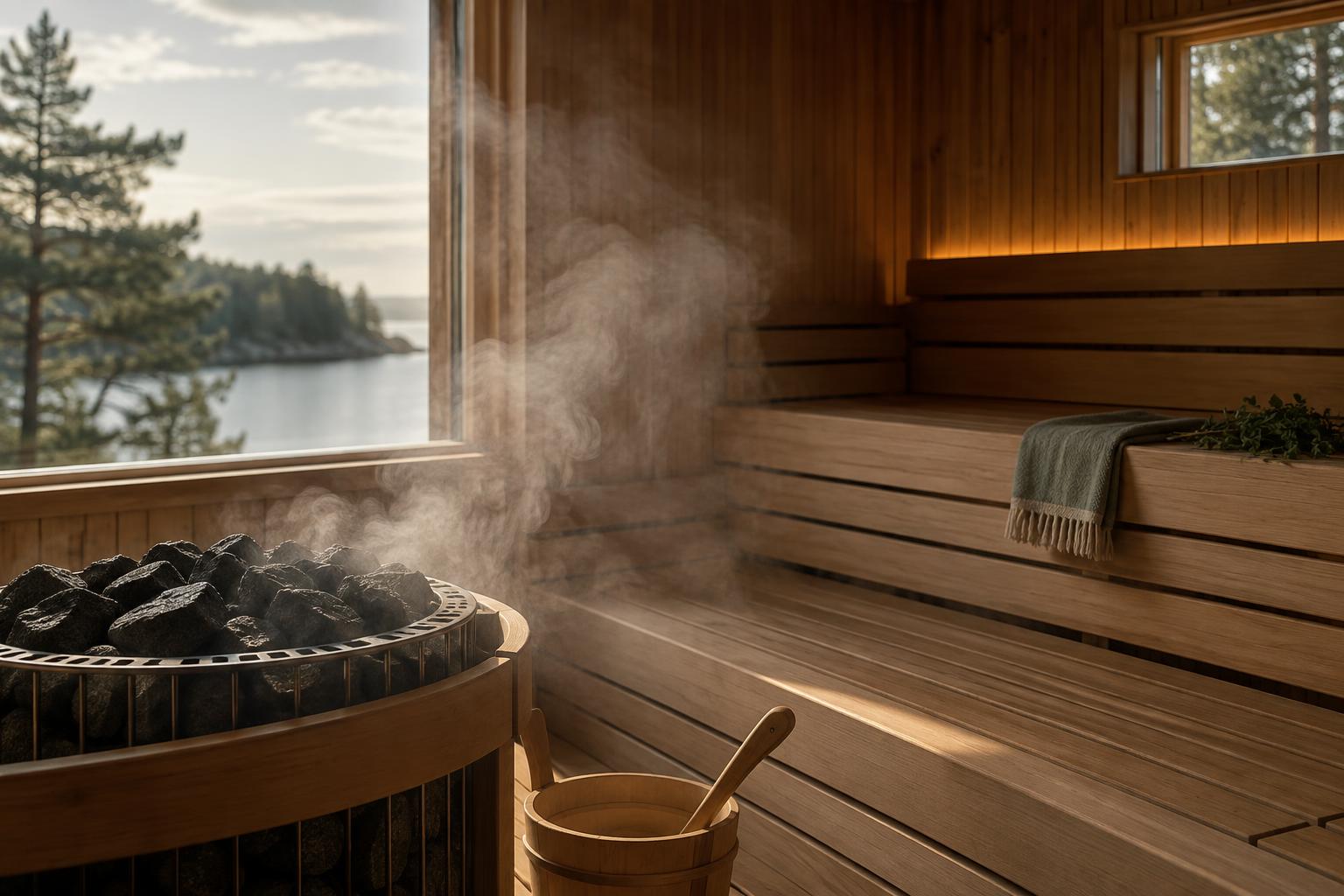
Several sources describe Finnish saunas as hotter, though they give different ranges. Steam and Oak puts Finnish sauna temperatures at 70–90°C, Tahoe Sauna Company at 80–100°C and Aitosauna at 70–100°C.
For Swedish saunas, Tahoe gives 70–80°C. Aitosauna says Swedish sessions may use slightly lower temperatures, depending on preference. Taken together, these accounts suggest hotter Finnish sessions are common, without establishing a clear temperature boundary.
Where you sit matters as well. Steam and Oak explains that tiered benches offer different levels of heat because warmer air sits higher in the room. For a sense of what to expect, check the operating temperature and seating arrangement alongside the national label.
Steam, dry air and löyly
Accounts of humidity differ quite sharply. Nordic Perspective contrasts steamy Finnish saunas with generally dry Swedish ones, drawing on the writer’s upbringing in Sweden and conversations with Finnish family members.
Tahoe Sauna Company says both traditions use water on hot stones, with Swedish sessions often favouring less intense bursts of steam. Aitosauna describes another possibility: Swedish sessions may sometimes be more humid, depending on preference. Swedish sauna cannot reliably be described as universally dry.
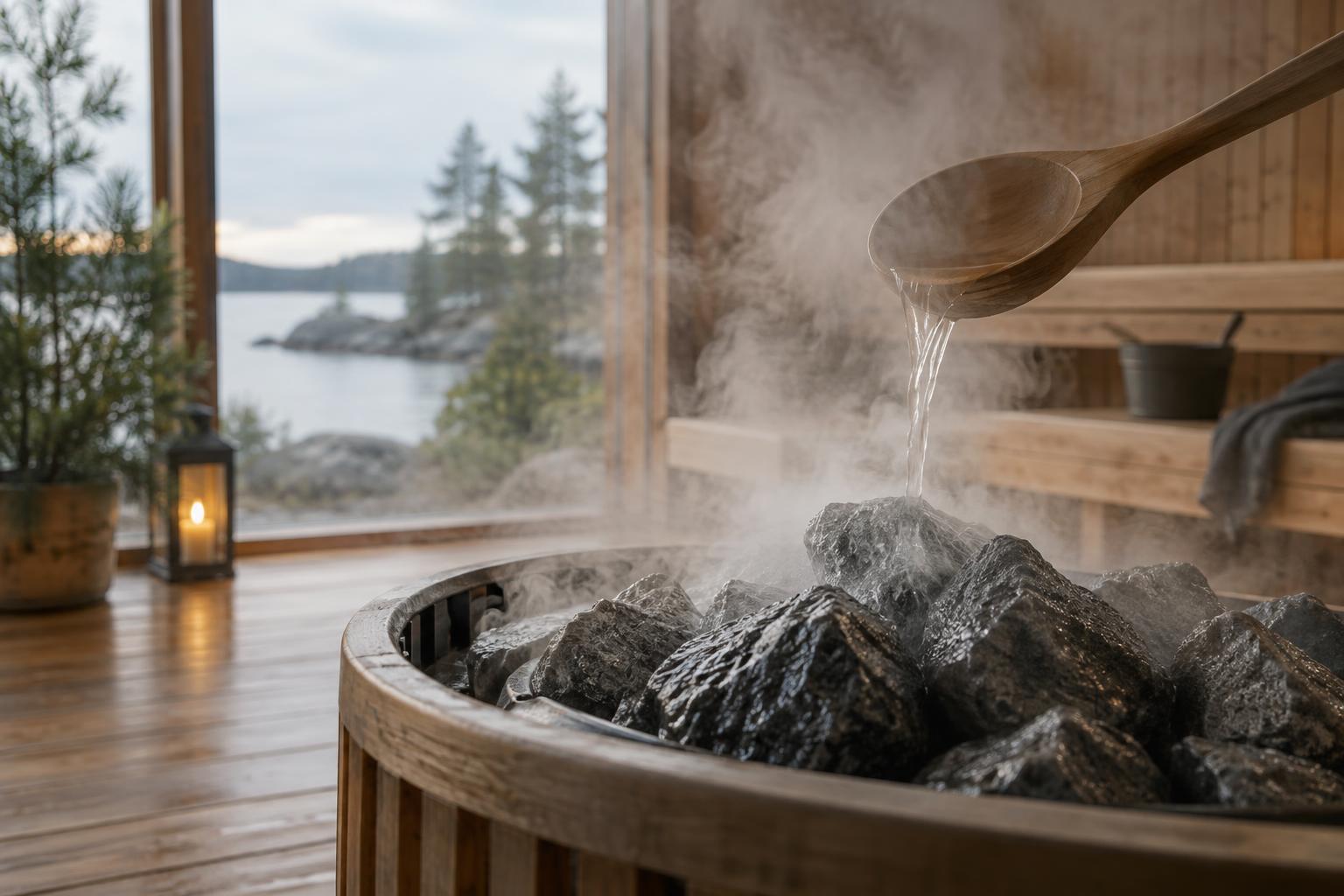
Löyly is the Finnish term for the steam produced when water reaches heated stones. Steam and Oak also uses the word to describe the quality of the sauna’s heat. Its account describes relatively dry air interrupted by temporary rises in humidity. Calling a Finnish sauna dry therefore does not mean it has no deliberate bursts of steam.
Family time, quiet time and conversation
Across the sources, Finnish sauna appears as an established part of everyday and family life. Nordic Perspective recalls regular family sessions, contrasting them with more occasional Swedish visits, often after swimming or exercise. That account reflects personal cultural experience; it cannot speak for every household.
Tahoe Sauna Company puts more emphasis on ritual in Finnish sessions and conversation in Swedish ones. Aitosauna likewise associates Finnish sauna with quiet relaxation and Swedish bastu with a more social atmosphere, while noting that both can be enjoyed alone or with others.
Finnish family gatherings are social too, so quiet and conversation do not belong exclusively to either tradition. If you are choosing a session, look for an atmosphere that suits you rather than relying on the national name.
Choosing a UK visit or a home sauna
For a UK visit or a home sauna, pay attention to the features behind the description. Both traditions share a timber interior, a heater with stones and seating that lets you experience different levels of heat. Neither is simply another name for a steam room.
Steam and Oak distinguishes intermittent löyly from the constant steam of a steam room. It also separates stone-heated sauna rooms from infrared cabins, which use emitter panels. Equipment makes these distinctions clearer than the cultural boundary between Finnish and Swedish sauna.
Before choosing, find out how hot the sauna runs, whether water is added to the stones and how the benches are arranged. A description of the session’s atmosphere should help you judge whether it offers quiet time or conversation. Those details are more useful than assumptions attached to either name.
Questions people ask
- What is a Swedish sauna called?
- Bastu. Sources describe it as sharing Finnish sauna’s basic principles: a heated room and a heater with stones, with several accounts also describing water added to create steam.
- What does löyly mean?
- Löyly means the steam created when water meets hot sauna stones. Steam and Oak also uses it more broadly for the quality of heat in the room.
- Is Swedish sauna always cooler than Finnish sauna?
- No. Tahoe Sauna Company gives a lower temperature range for Swedish saunas, but other sources give different Finnish ranges and emphasise personal preference. It is a tendency, not a guarantee.
- Is a Finnish sauna the same as a steam room?
- No. Steam and Oak describes a Finnish sauna as a timber room with a stone-filled heater and temporary bursts of steam. Its steam-room comparison is a tiled, sealed room supplied with constant steam from a generator.
- Does UNESCO recognition apply to Finnish sauna culture?
- Yes. Finland’s sauna culture is on UNESCO’s Intangible Cultural Heritage list. Recognition applies to the cultural tradition; it does not certify individual sauna products.