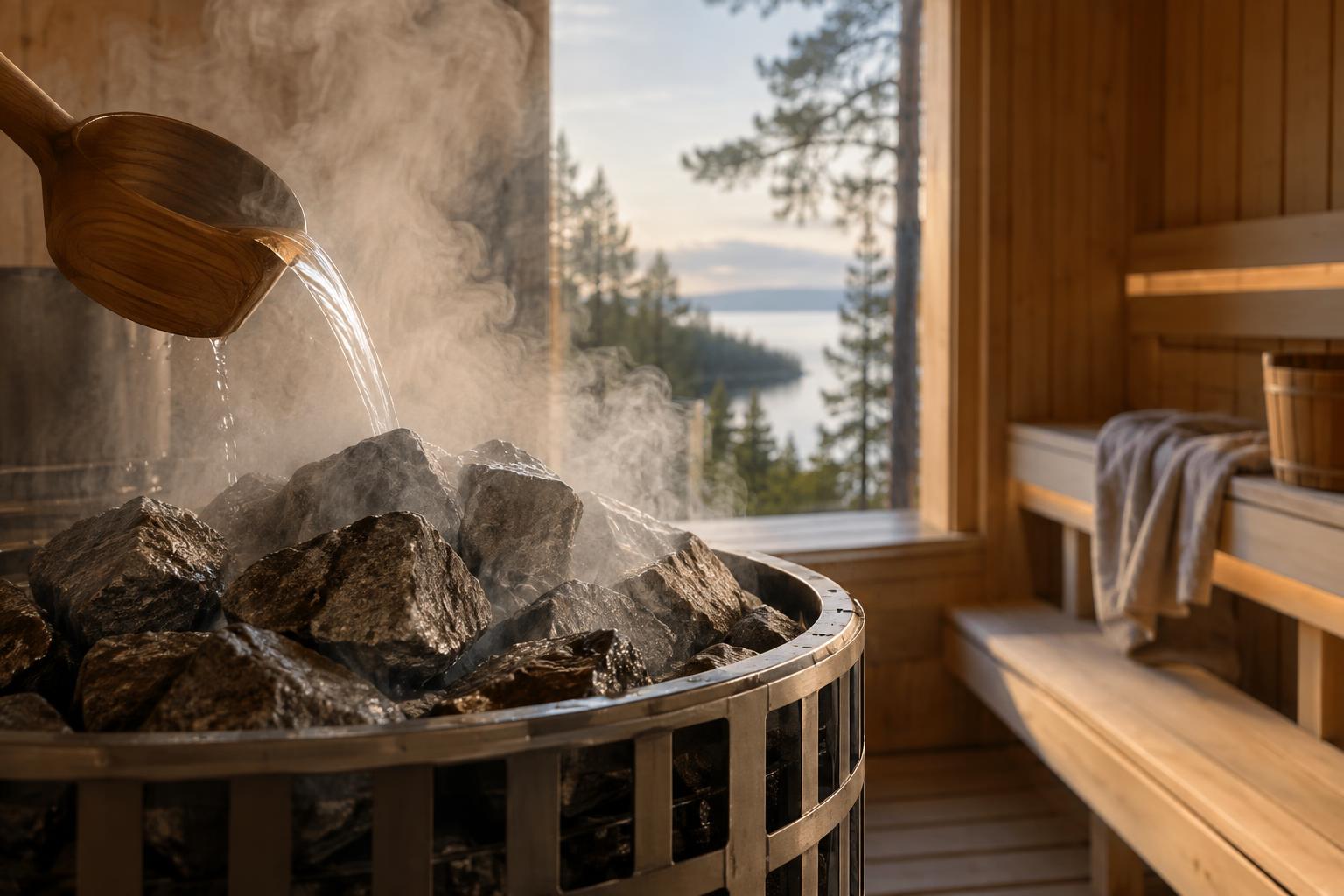
A sauna heater produces heat using electricity, burning wood or gas. In stone-based models, stones hold that warmth while circulating air carries it into the room. Pouring water over the hot stones creates steam and raises humidity. Electric heaters commonly use a thermostat or control unit to regulate temperature, but stone condition and airflow also affect performance.
From the heat source to the room
In an electric sauna heater, powered elements generate heat and warm the stones around them. Those stones retain and release warmth, helping to heat the surrounding air. Circulation then carries it into the sauna room.
Leave space between the stones and air can move through the heater. Pack them too tightly and even very hot elements may struggle to warm the room effectively. Harvia’s testing shows how restricted airflow slows this process, so the power rating alone cannot tell you how well a heater will perform. Stone condition and arrangement matter too.
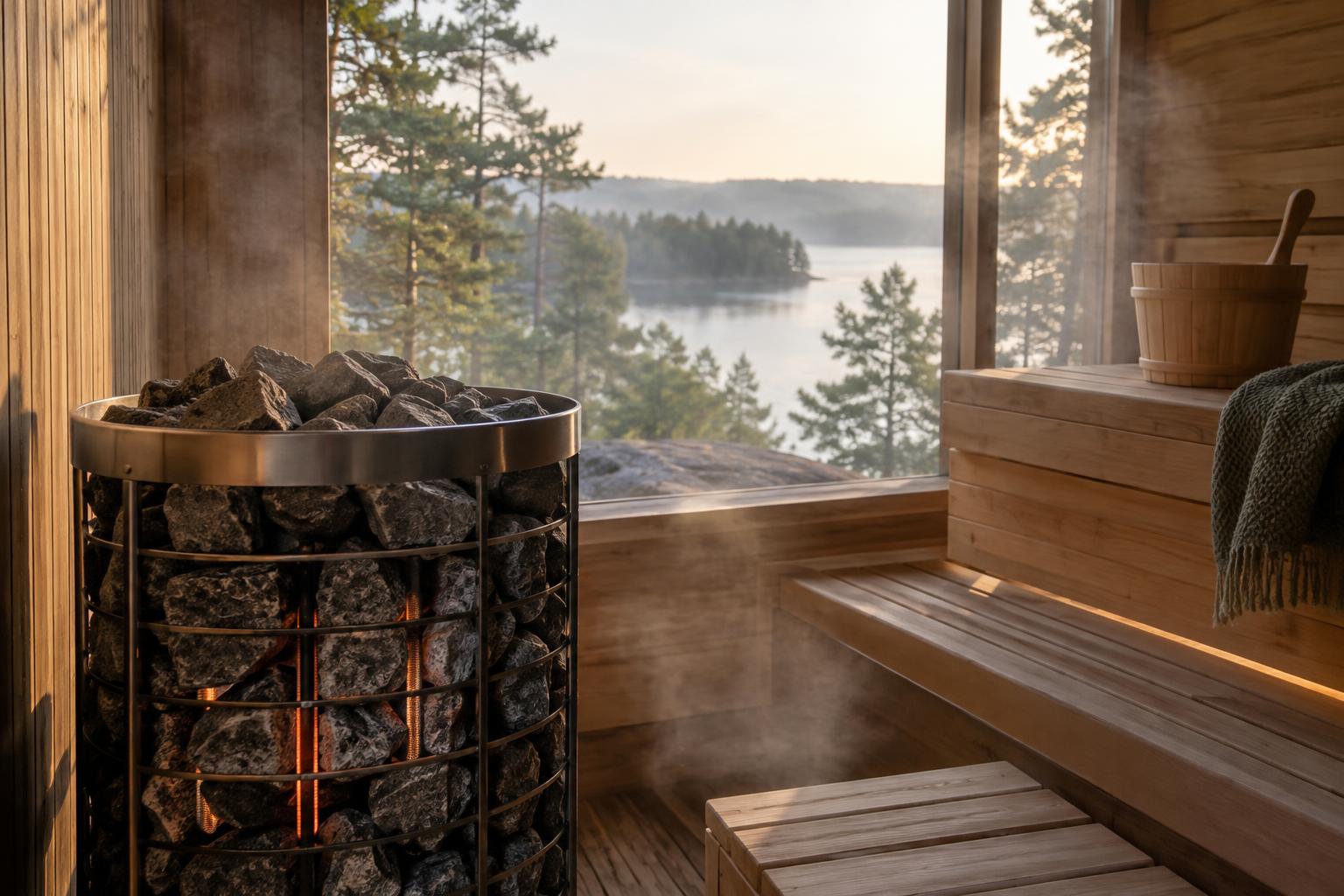
Stones hold warmth and turn water to steam
Water vaporises when it meets hot sauna stones, increasing humidity. Producing this steam is distinct from generating heat: it needs water as well as a hot surface.
Sauna stones must withstand strong temperature changes. Harvia describes olivine diabase as a traditional choice with good heat storage and thermal conductivity; its dense structure helps it retain and release warmth.
Size matters as well. Harvia supplies different stone sizes and advises following the heater manufacturer’s recommendation. If you are buying replacements, check that guidance rather than assuming every heater takes the same stones. They are a working part of the appliance, not just a covering.
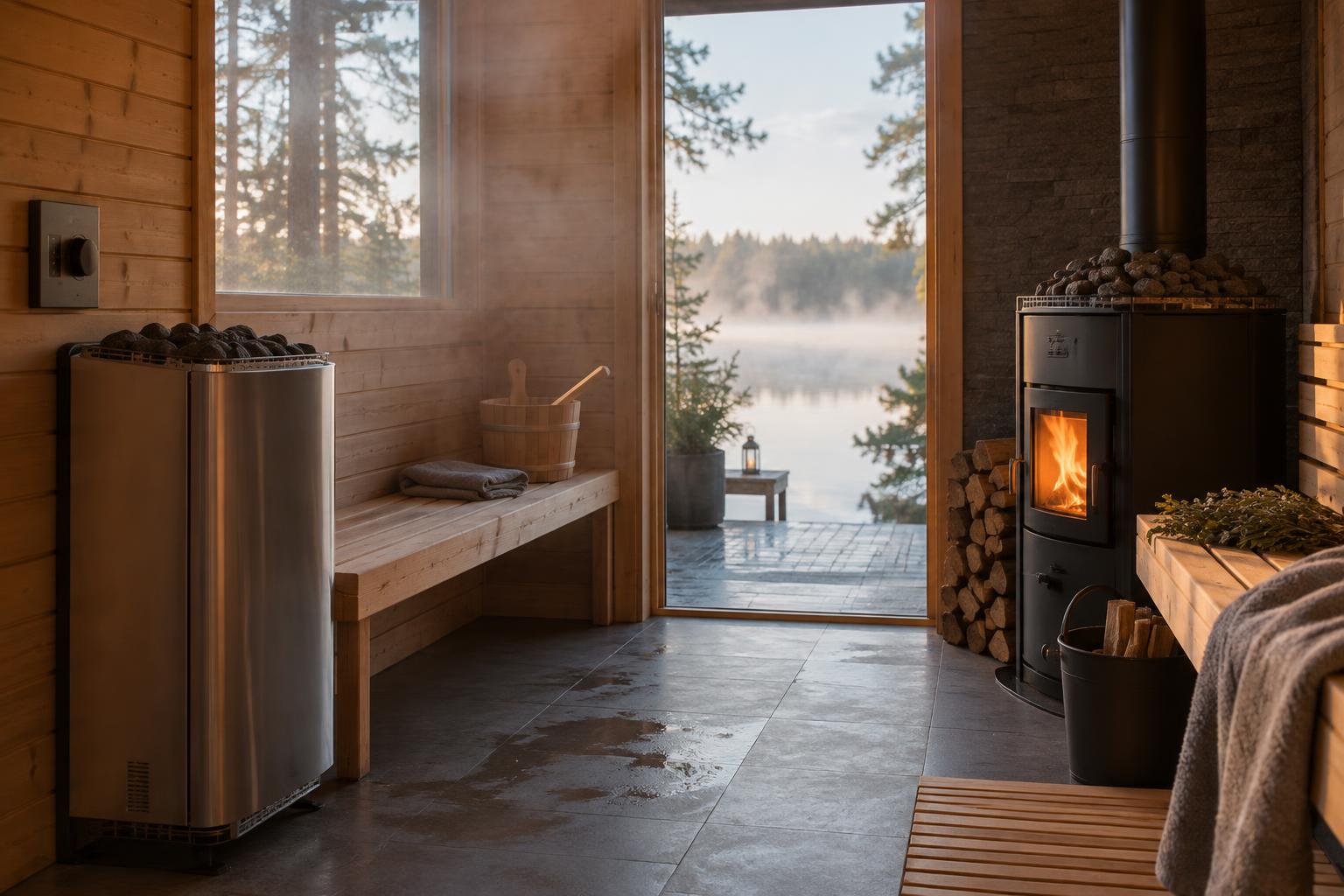
Electric, wood-burning and gas heaters
Electric heaters use heating elements and often have a thermostat to regulate temperature. Depending on the model, a control unit, panel or remote lets you choose settings, which may include a temperature and timer.
Burning logs provides the heat in a wood-burning model, without needing electricity for heat production. Operation is manual, and regular maintenance includes managing ash and soot.
Gas heaters run on natural gas or propane. Haven of Heat describes them as less common than electric models and notes that any running-cost advantage depends on gas being cheaper than electricity locally.
These are not interchangeable appliances. If you are comparing them, look beyond the fuel: how you control the heat and the maintenance you take on differ too.
What Harvia’s heating test shows
A heater’s power rating needs to suit the size of the sauna. Temperature controls serve a separate purpose, regulating the heat or letting you select settings. Neither removes the need for air to circulate through the stones.
Harvia tested a 7 kW Cilindro PC70E heater in a 10 cubic metre sauna. After an hour, the room with new, tightly stacked stones reached around 60°C. With new stones laid loosely according to the instructions, it reached around 70°C in the same period.
This was a particular test, not a promised warm-up time for every sauna. Harvia also measured lower maximum element temperatures with new, loosely laid stones than with old, tightly stacked stones. Better circulation helped warm the room without the elements getting as hot.
Keeping the stones in working condition
Harvia recommends annual maintenance for electric heaters, alongside regular checks of the stones. They can crumble as they deteriorate and may damage the heating elements. If you notice pieces beneath the heater, inspect the stones rather than relying on how the appliance looks from outside.
You do not necessarily need to replace them all. Harvia says stones in good condition can stay in use, while crumbling or discoloured stones should be replaced. Correct re-stacking supports airflow and avoids placing a burden on the elements.
Restricted circulation can lengthen the warm-up and increase energy use, so stone care affects both performance and the heater’s condition. Harvia calls for professional attention when damaged elements need maintenance. Use a qualified electrician for electrical work.
Questions people ask
- Does a sauna heater produce steam by itself?
- Not in the stone-based heaters described here. Steam forms when you pour water over the hot stones, turning it to vapour and raising humidity.
- Why does an electric sauna heater need stones?
- Stones store and release warmth, help heat the surrounding air and provide a hot surface for producing steam. Gaps between them allow air to circulate.
- Can tightly packed stones slow the heating process?
- Yes. Harvia explains that tightly packed stones restrict airflow, which can increase both the time and energy needed to warm the sauna.
- Do sauna stones need replacing every year?
- Not necessarily. Harvia recommends annual electric-heater maintenance and regular stone checks, but stones in good condition can remain. Replace any that crumble or become discoloured.
- How is an electric sauna heater’s temperature controlled?
- A thermostat often regulates the temperature. Depending on the model, a control unit, panel or remote lets you set the temperature and timer.
Plan your home sauna
Size, heater, wood and budget in one place, then get quotes from vetted UK builders.