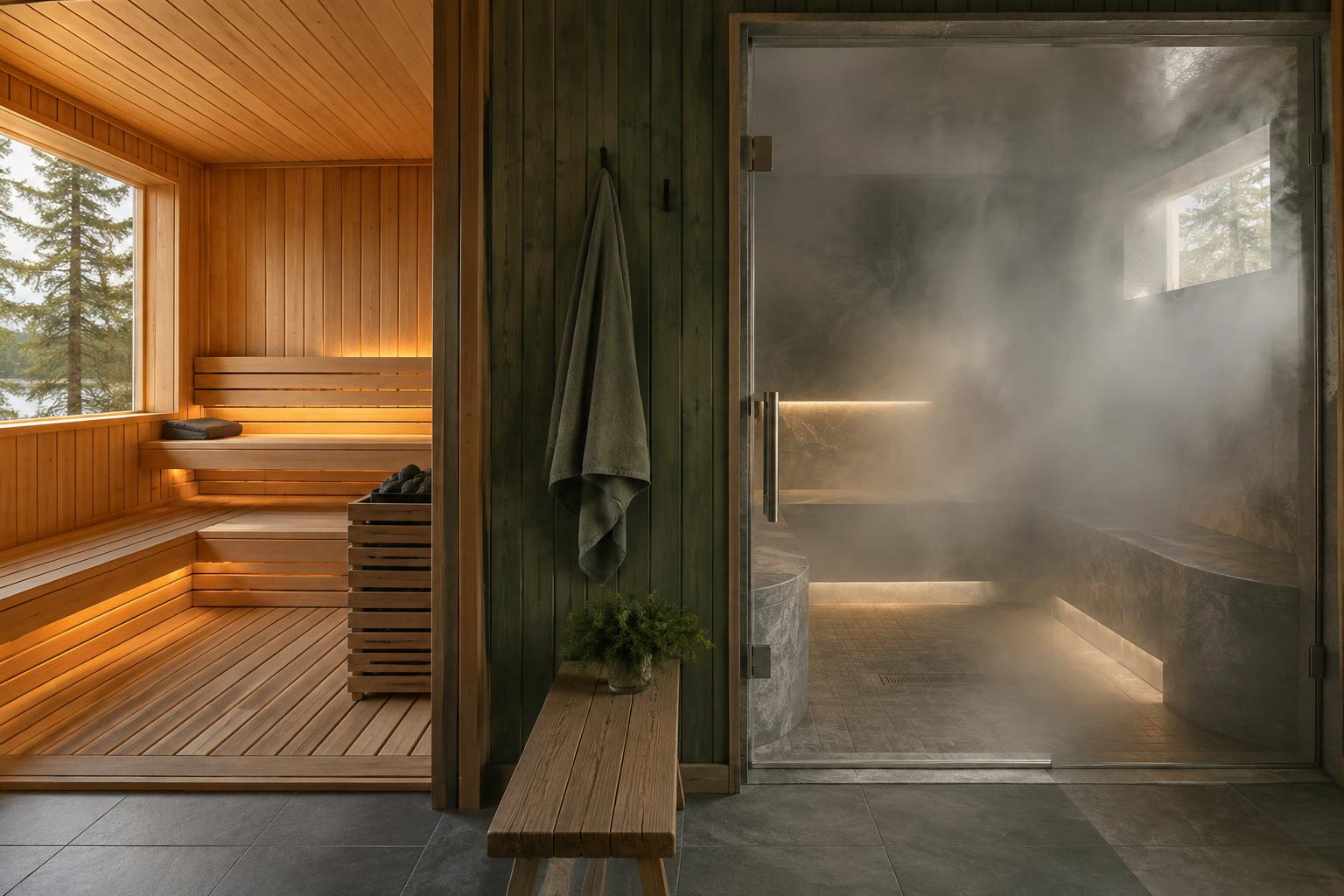
A traditional sauna has a higher air temperature and less moisture than a steam room. Typical ranges are 65–90°C for saunas and 43–49°C for steam rooms, where humidity is close to 100%. Temperature is only part of the comparison: the moisture in the air, heating method and materials all help distinguish the rooms.
Temperature tells only half the story
A sauna has the higher air temperature, but a steam room has much more moisture in the air. Palmako gives the typical sauna range quoted above. For steam rooms, Sun Valley Saunas supplies the range above, while Palmako gives around 43°C. These describe typical conditions, not guaranteed settings for a particular room.
Published humidity figures vary. Healthline gives 5–10% for dry saunas. Sun Valley Saunas uses the same range in its introduction, then gives 5–30% later. For steam rooms, Healthline reports 95–100% and Good Housekeeping describes 100%. Despite those differences, the sources agree on the main point: steam rooms have much wetter air.
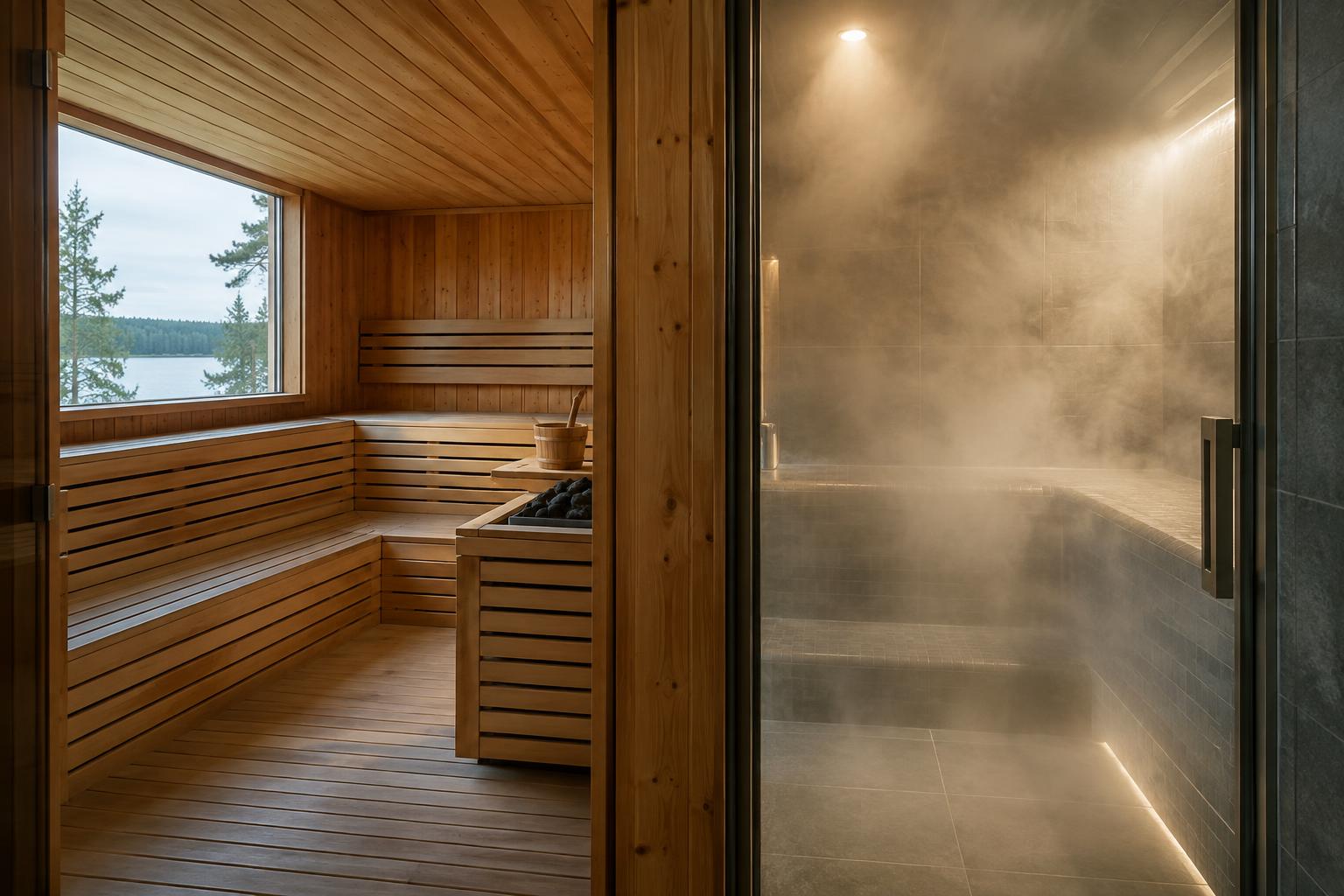
Water on stones changes the air
Calling a sauna dry does not mean it is free of moisture. Good Housekeeping describes water being added to hot stones in a traditional Finnish sauna to create vapour. It reports humidity around 10% without added water, potentially rising above 60% when water is added.
That change differs from a steam room's sustained humidity, supplied by a steam generator. It is also no invitation to pour water yourself: The Lab explicitly prohibits adding liquid to its sauna stove. Follow the rules for the heater you are using.
Wood, tile and the heat behind them
Spruce, pine and cedar are among the woods Sun Valley Saunas lists for traditional saunas, which it describes as mostly wooden. A heater and hot stones provide heat; ventilation helps keep humidity low. In steam rooms, non-porous surfaces resist moisture absorption. Sun Valley Saunas lists tile, glass and plastic, while Palmako also describes tile or glass construction. A steam generator supplies moisture, which the room is designed to retain.
Wall finishes are only one clue. When comparing descriptions, look for a heater with stones or a steam generator. Together, the heating method, moisture level and materials tell you more than the room's name.
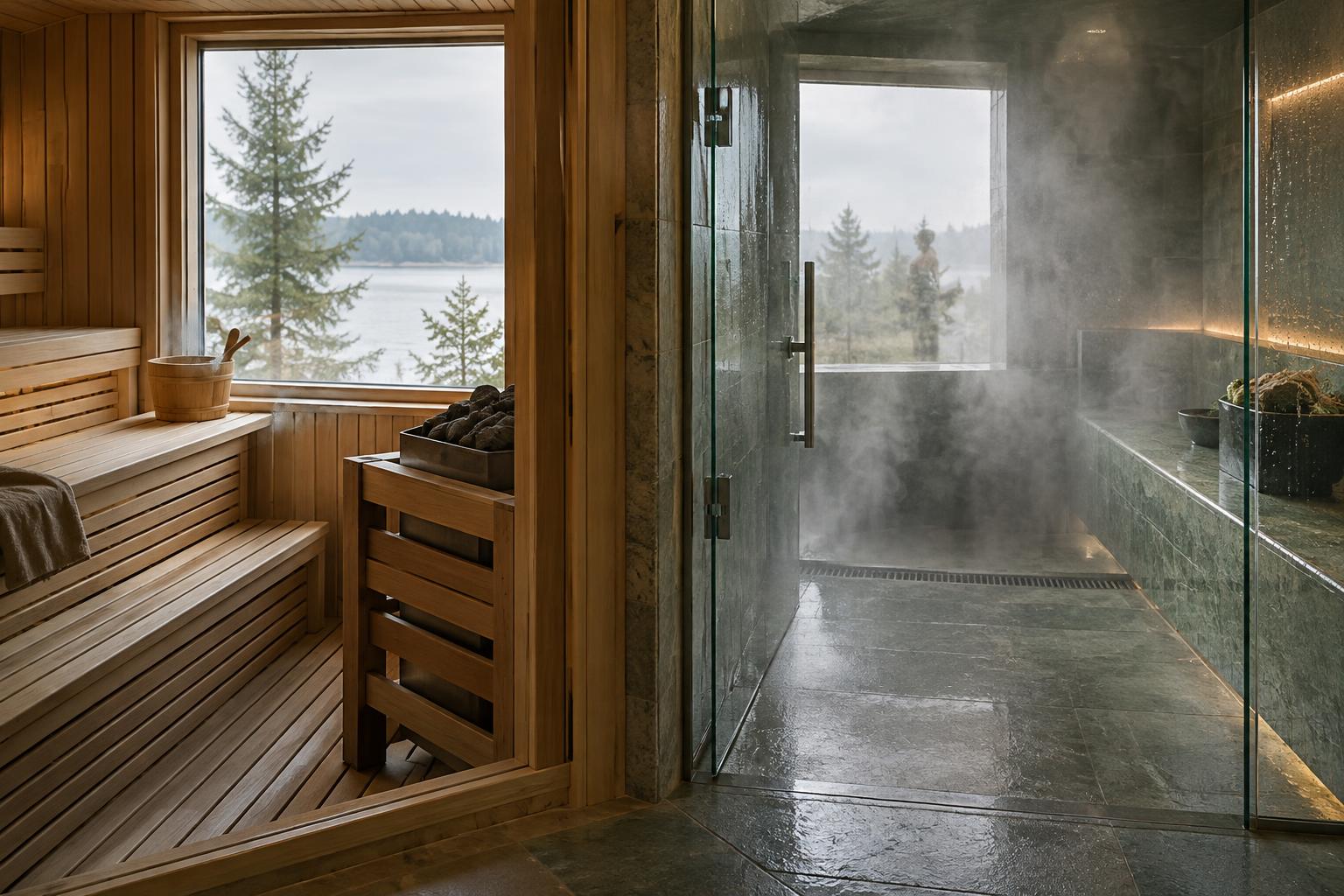
Choosing a room and an order
You can use either room on its own. If you want to combine them, The Lab treats the order as a matter of personal preference and the experience you want.
Think about the air as well as the heat: a lower temperature does not tell you how humid a room will be. Neither the temperature figure nor the name gives the full picture.
For time spent inside, The Lab gives a 5–15 minute range for either room and suggests adjusting your routine to your comfort. Follow the instructions where you visit, rather than treating that venue's range as a rule for all rooms.
Before you step inside
Preparation and etiquette can overlap. At The Lab, visitors are asked to shower and wash off creams and lotions beforehand. Swimsuits or swimming shorts are required, along with a towel to sit on, placed on the bench. Long hair should be tied back.
Mobile phones, exercise, essences and aromatic oils are excluded from its hot rooms. Pool shoes and sliders can go inside, but must stay off the benches. Those are The Lab's rules; check your venue's own guidance before entering either room.
Questions people ask
- Which is hotter, a sauna or a steam room?
- A traditional sauna generally has the higher air temperature. Palmako's sauna range is higher than Sun Valley Saunas' steam room range, but steam rooms have much greater humidity.
- Is a steam room the same as a wet sauna?
- Healthline uses “wet sauna” as another name for a steam room. Names vary, so check the description. A steam room maintains very high humidity; a traditional sauna generally runs at a higher temperature with less moisture.
- Can you pour water onto sauna stones?
- Only where the venue allows it. Some traditional saunas use water on hot stones to create vapour, but The Lab prohibits pouring liquid onto its stove. Follow the rules for the sauna you are using.
- Do you have to use both rooms?
- No. The Lab's guidance allows you to use just one. If you combine them, it leaves the order to personal preference.
- Are steam rooms usually made of wood?
- Wood is associated with traditional saunas in the supplied descriptions. Steam rooms use non-porous materials such as tile or glass to resist moisture absorption in the humid environment.