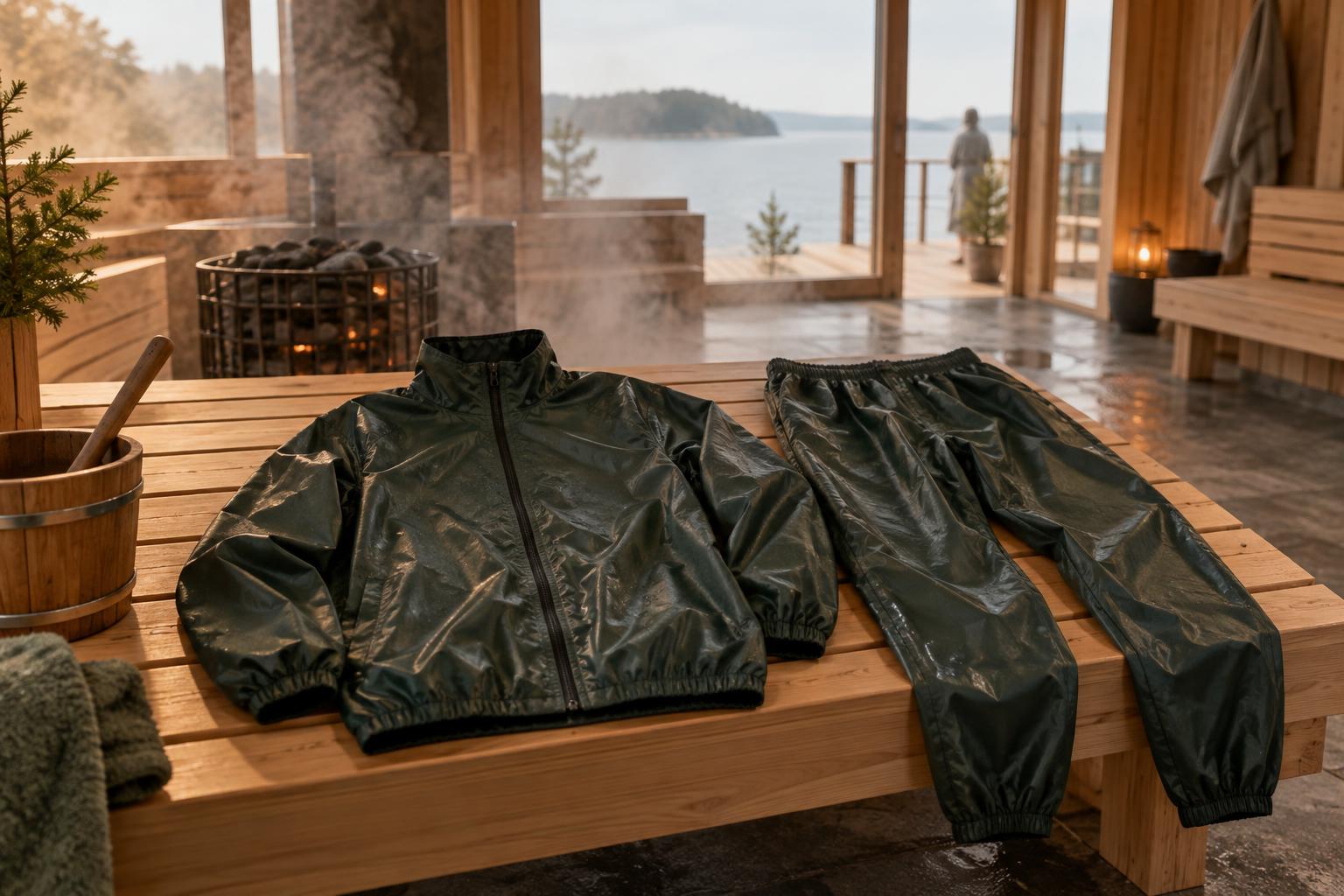
A sauna suit is a heat-retaining workout garment designed to increase sweating during exercise. It often resembles a waterproof tracksuit, with a top and trousers, though other formats are available. Materials and fastenings vary between products. The name describes clothing rather than a sauna room, and buying comparisons should focus on the exact garment.
What does a sauna suit look like?
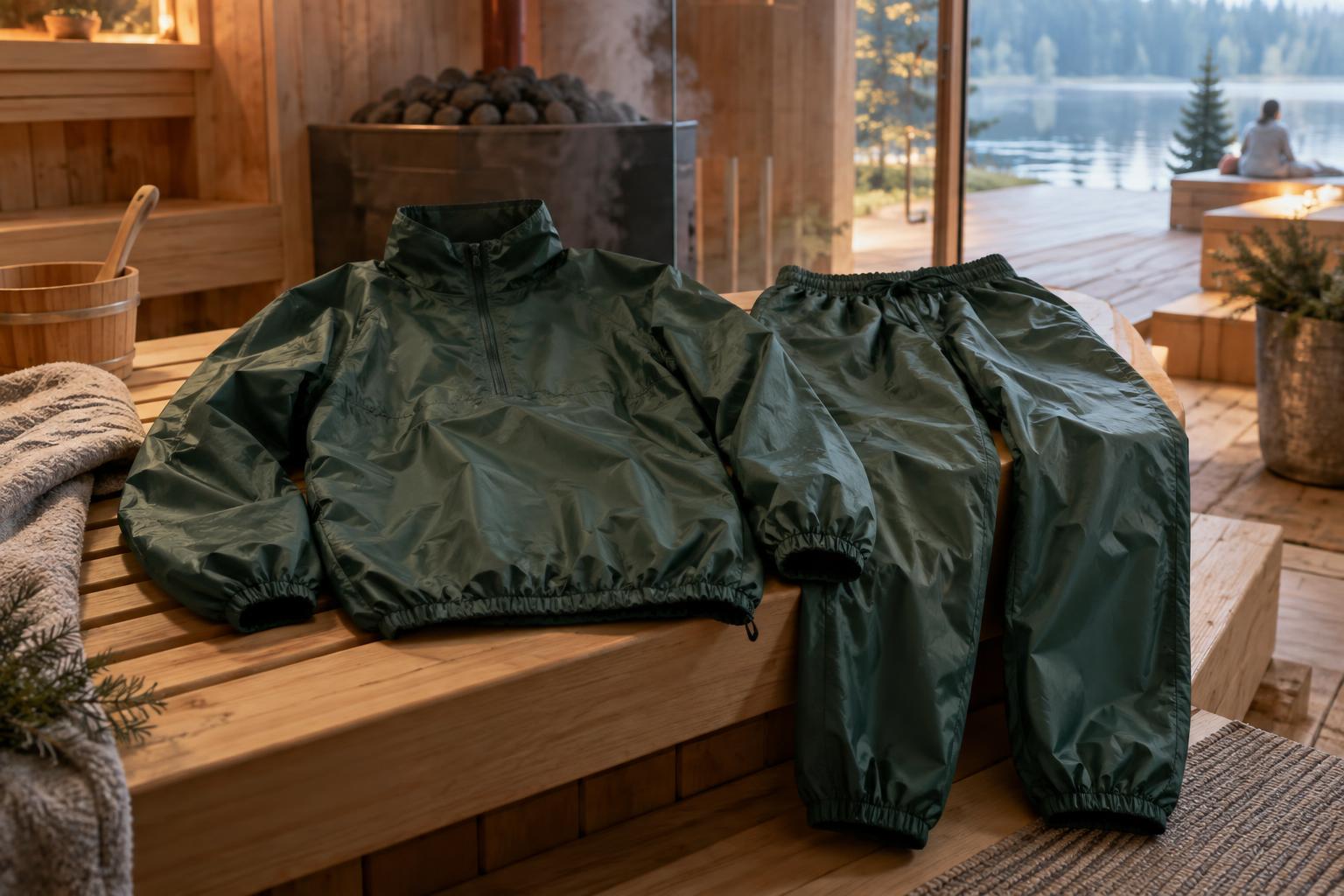
A sauna suit commonly comes as a matching top and trousers. Wikipedia describes a typical design with a pullover jacket, drawstring trousers and elasticated openings. Some jackets also have a hood. These details help retain heat and moisture inside the clothing.
Not every suit follows that tracksuit shape. WebMD describes neoprene designs that resemble wetsuits, as well as full-body garments and separate pieces for the upper or lower body. Healthline also mentions suits, shirts and trousers sold within this category.
If you are comparing listings, check what the purchase includes. A separate top is not the same format as a two-piece suit. Look at the garment description rather than relying on the words “sauna suit” alone. Those words cover several different constructions, not one fixed style.
What materials are sauna suits made from?
The supplied sources describe different materials. Wikipedia says early versions used rubber or rubberised cloth, which explains the alternative name “rubber suit”. It describes PVC and coated nylon as typical modern materials. WebMD, meanwhile, says many suits use neoprene.
Fight Gear gives more specific examples from its boxing range. Its guide lists polyester for the Tuf Wear Lightweight Sweat Sauna Suit and the Adidas Sauna Suit. It lists nylon for the BOXRAW Hagler Sauna Suit 2.0.
These descriptions differ in emphasis rather than establishing one fabric used by every manufacturer. You should check the specification of the exact model. A general comparison between PVC and neoprene will not cover all the products described here. Material is one useful starting point, but the openings, fastening arrangement and fit also deserve attention.
How should you check the fit?
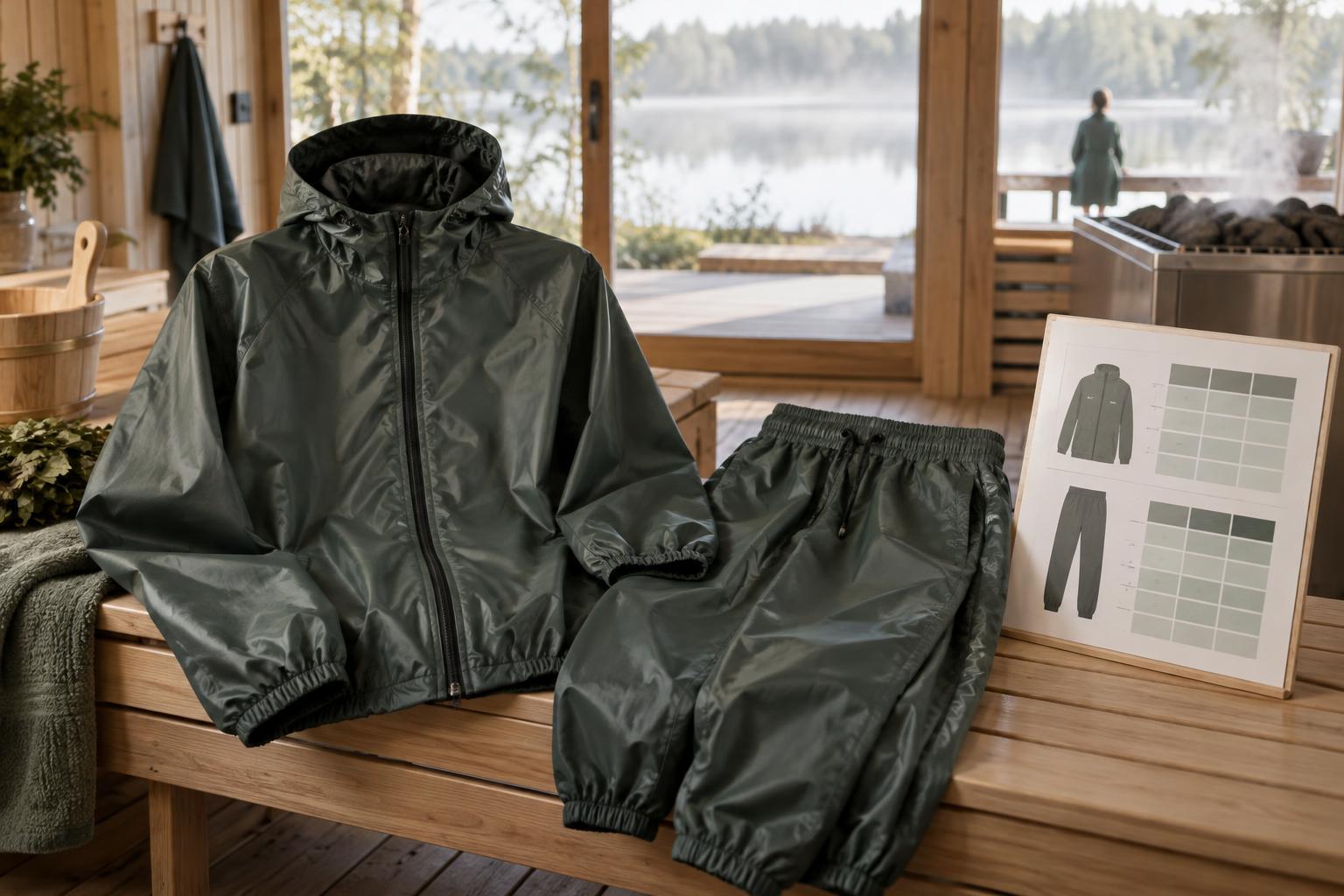
Use the size chart for the specific suit. Fight Gear advises taking the chest and waist measurements requested by that chart, rather than choosing clothing by boxing weight category. It also cautions against assuming that your usual tracksuit size will transfer directly between brands.
Check the top around your shoulders and the trousers around your hips and knees. Raise your arms, turn your torso and bend your knees. The garment should allow these movements without pulling tightly or catching. You should also be able to reach the closures easily.
If your measurements fall between sizes, ask for advice about that particular model before ordering. Choose a practical fit rather than buying a smaller size to retain more heat. For a pullover design, pay particular attention to shoulder room.
Which fastenings and product details can you compare?
Fight Gear identifies cuffs, hems, straps and zips as useful differences between suits. These affect how the garment is put on, adjusted and removed. Compare the arrangement you would find practical, rather than treating every two-piece suit as interchangeable.
The examples in its guide offer distinct combinations: - The Tuf Wear Lightweight Sweat Sauna Suit has polyester fabric, elasticated openings, zipped pockets and zipped cuffs. - The Adidas Sauna Suit is a polyester two-piece with a crew-neck pullover top and elasticated wrists and ankles. - The BOXRAW Hagler Sauna Suit 2.0 uses nylon, adjustable straps and elasticated cuffs.
These are construction details, not a ranking. Use them to decide which features you want to investigate. Check each product page for its current price and available sizes before making a buying decision.
How should you read sauna suit marketing?
Separate the garment specification from promises about results. Fabric, garment format and fastening details tell you what is being sold. Promotional claims are a different kind of information and should not replace those practical checks.
The supplied sources differ in their treatment of the evidence. Healthline says the advertised benefits it discusses lack clinical research. WebMD describes limited research and summarises studies, while stopping short of presenting the broader claims as settled. The accounts therefore do not give the same picture of the research available. This guide makes no health or fitness promises.
For a straightforward comparison, keep a short checklist: the exact model, included pieces, stated material, size chart and accessible closures. Fight Gear also notes that a sauna suit is not required to start boxing. You do not need to treat specialist clothing as a basic entry requirement.
Questions people ask
- Is a sauna suit always a two-piece outfit?
- No. A top and trousers are common, but WebMD also describes full-body garments and separate upper- or lower-body pieces. Check the listing to see what is included.
- Are all sauna suits made from neoprene?
- No. The supplied sources also describe PVC, coated nylon and polyester. Look at the exact product specification rather than assuming a material from the category name.
- Why are sauna suits sometimes called rubber suits?
- Wikipedia traces the name to early designs made from rubber or rubberised cloth. The name does not mean that every current sauna suit contains rubber.
- Should you choose your usual tracksuit size?
- Do not assume it will match. Use the model’s size chart and the measurements it requests. If you fall between sizes, ask for model-specific advice before ordering.
- Do you need a sauna suit to start boxing?
- No. Fight Gear says ordinary training clothing is sufficient to get started. Its guide places sauna suits in the specialist-kit category rather than among the essentials.
Plan your home sauna
Size, heater, wood and budget in one place, then get quotes from vetted UK builders.