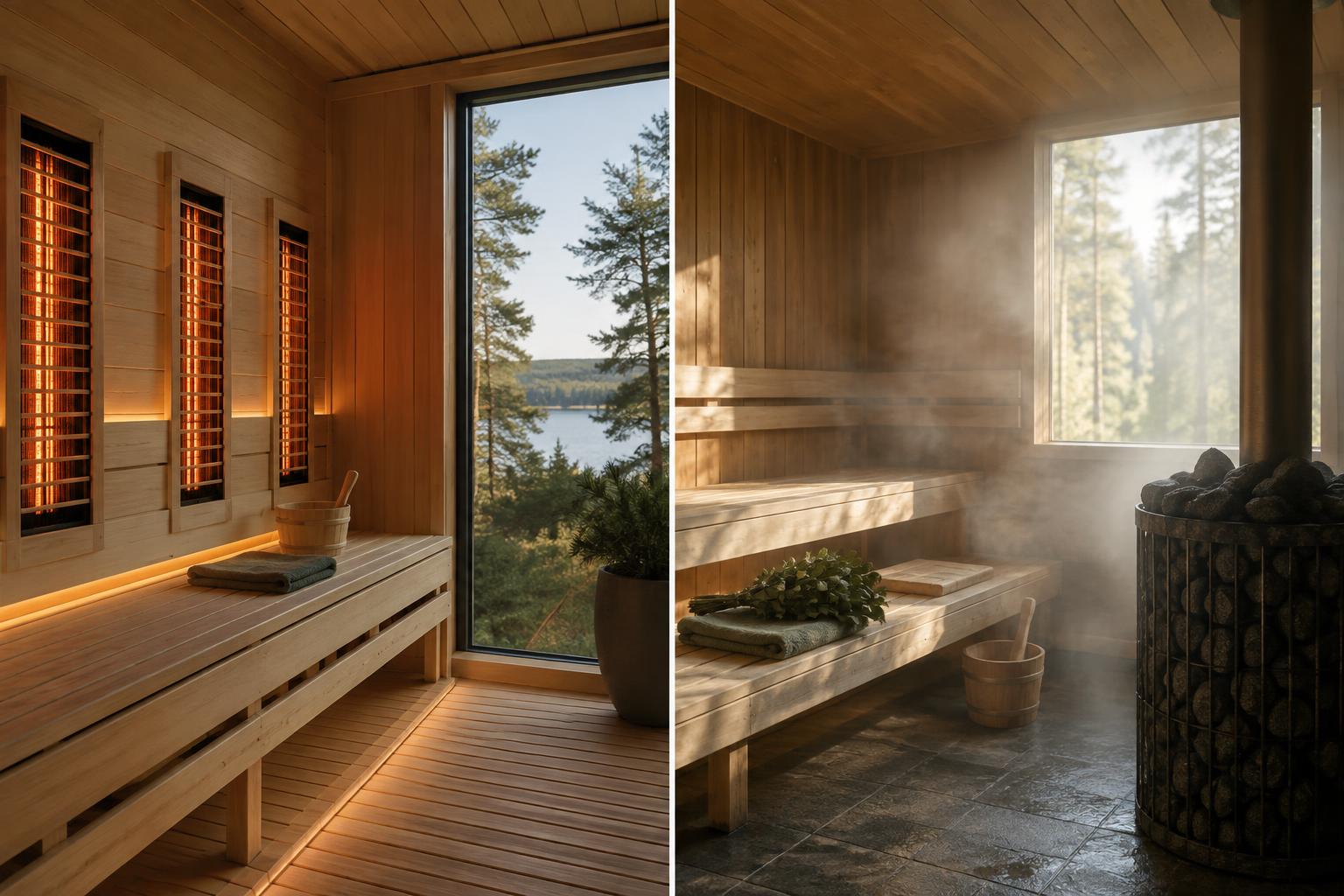
Infrared saunas use light to heat your body directly. Traditional saunas heat the surrounding air with a heater and stones, using electric or wood-burning heat. Infrared cabins usually run at a lower air temperature; suitable traditional models also offer bursts of steam. The choice comes down to how you like the heat to feel and what fits your routine.
The heater makes the difference
Wood panelling and benches will not tell you what kind of sauna you are looking at. The heating system will.
In a traditional sauna, a heater and stones warm the cabin air. The heater can be electric or wood-burning, so an electric sauna is not necessarily infrared. Infrared cabins instead use emitters, described as lamps or panels, to deliver infrared light and warm your body more directly. They do not rely on very hot surrounding air.
When you read a venue description or compare home cabins, look past the appearance and check how the heat is produced.
Temperature is only part of the experience
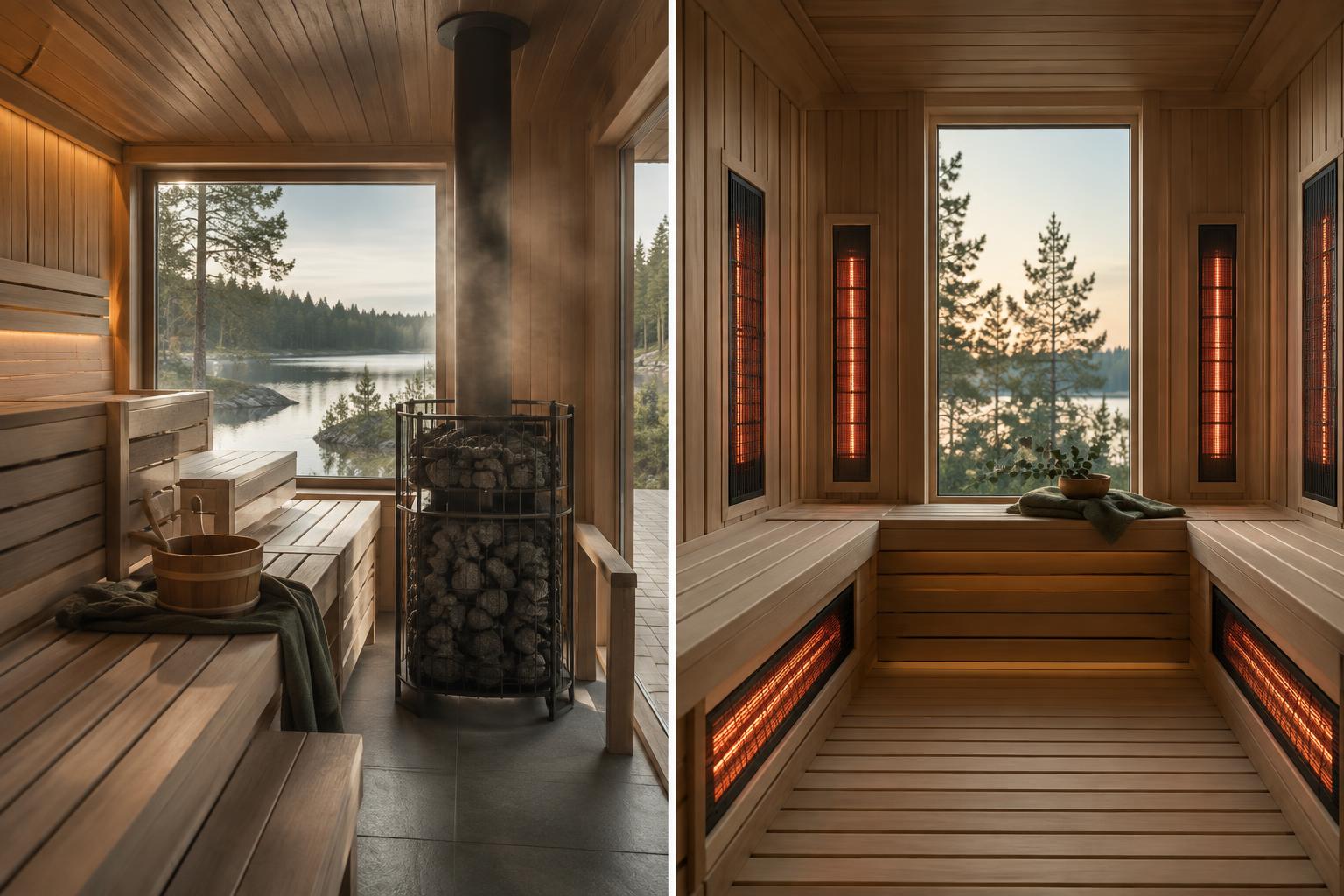
For traditional home saunas, Which? gives a typical air temperature of 70–90°C. Vidalux quotes the same range, while noting that temperatures can go higher.
There is no fixed range that covers every sauna. GoodRx gives narrower operating ranges for both types than British GQ, and Dr Michael Ruscio’s guide gives different lower limits again. What they agree on is the broader distinction: infrared normally runs at a lower air temperature.
GoodRx notes that some people find this more comfortable. Hotter is not automatically better, so let your preference guide you rather than choosing by the temperature alone.
Steam changes how the heat feels
A traditional heater can provide dry heat on its own. Where the heater and stones are designed for it, adding water creates steam, a distinction made by GoodRx. Not every sauna supports this.
Vidalux describes löyly, the Finnish practice of pouring water over heated stones. The burst of steam makes the heat feel more intense, even when the air temperature changes little. That shifting sensation sets it apart from infrared warmth.
If steam matters to you, look for a traditional model that supports it. Infrared is the closer match if you prefer direct warmth in cooler air.
Infrared labels and hybrid cabins
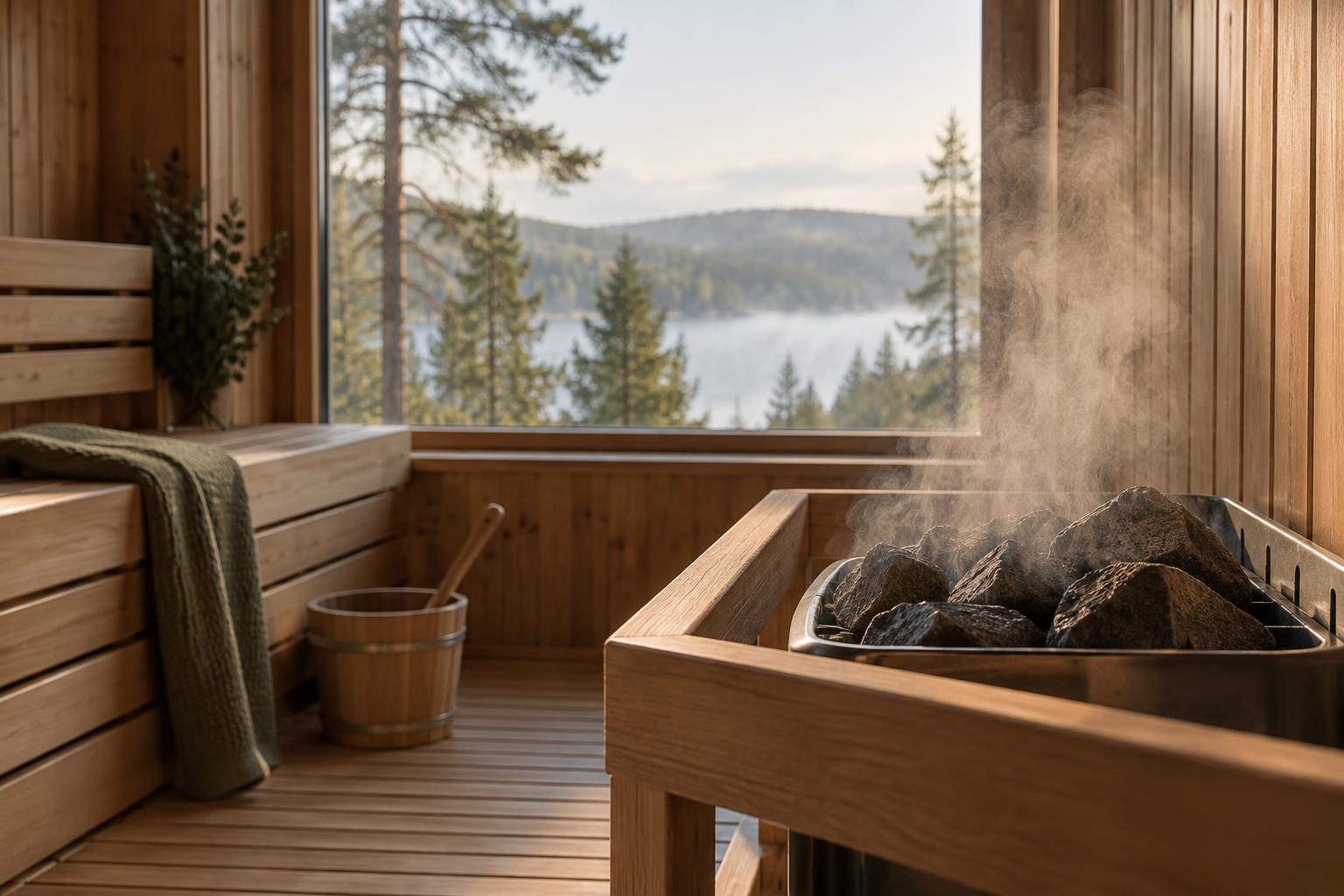
Infrared equipment comes in different forms. Dr Michael Ruscio’s guide distinguishes near-, mid- and far-infrared wavelengths, describing far-infrared as the most commonly used in infrared sauna devices. Full-spectrum models use separate heating elements to provide all these wavelength categories.
Full-spectrum does not mean the cabin also contains a traditional heater. It describes the infrared equipment, not a combination of sauna types.
Hybrid means something different. Centuraheat describes cabins that combine traditional and infrared heating, giving you access to both methods at home.
Making room for a sauna at home
Once you know which experience you prefer, the practical questions become more useful. Centuraheat highlights available space, indoor or outdoor placement, running costs and how often you expect to use the sauna. Privacy and convenience are part of the appeal of owning one, but its value depends on regular use.
Which? puts a typical spend on a traditional dry sauna at £2 thousand or more. There is no equivalent UK infrared purchase price or like-for-like running-cost comparison here to establish which type is cheaper overall. Compare purchase and running costs for the particular models you are considering, rather than assuming either heating method will cost less.
Think about where the cabin belongs, indoors or in the garden, and where using it will fit into your routine. For electrical work, use a qualified electrician.
Questions people ask
- Is an electric sauna the same as an infrared sauna?
- No. A traditional sauna can use an electric heater to warm stones and cabin air. Infrared uses emitters instead. Electricity is the power source, not the distinction between the heating methods.
- Is an infrared sauna cooler than a traditional sauna?
- Usually, in terms of air temperature. Published ranges vary, but infrared generally operates below traditional sauna temperatures. Some people find that more comfortable.
- Can a traditional sauna produce steam?
- Yes, if its heater and stones are designed for water to be added. It can also provide dry heat from the heater alone. Check before assuming steam is supported.
- Does full-spectrum mean the same as hybrid?
- No. Full-spectrum covers near-, mid- and far-infrared wavelengths. A hybrid cabin combines infrared equipment with traditional sauna heating.
- Is infrared cheaper to run?
- A like-for-like UK running-cost comparison is not available here, so there is no firm basis for saying it is cheaper. Check the costs of the models you are considering.
Plan your home sauna
Size, heater, wood and budget in one place, then get quotes from vetted UK builders.
Keep reading
Sources
- Infrared Sauna vs. Traditional Sauna: Which Is Better? - Dr. Michael Ruscio
- Infrared Sauna vs. Traditional Sauna: Which One Is Better? - GoodRx
- Infrared vs. traditional sauna: which is actually better for you? - British GQ
- Infrared vs. Traditional Saunas: The Engineering Differences ... - Vidalux
- Are Home Saunas Worth It? UK Costs, Benefits and Buying Guide
- Best home sauna: a buying guide - Which.co.uk